Municipal firefighting efforts routinely introduce 500 to 3,000 gallons of water into a residential structure during active extinguishment. In dense Los Angeles hillside framing, such as post-and-beam properties along…
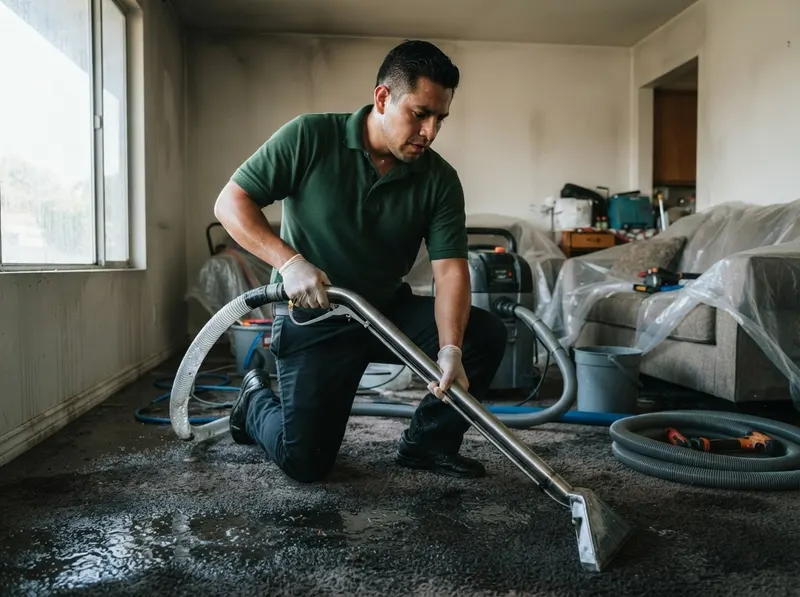
Municipal firefighting efforts routinely introduce 500 to 3,000 gallons of water into a residential structure during active extinguishment. In dense Los Angeles hillside framing, such as post-and-beam properties along the narrow inclines of Silver Lake and Hollywood Hills, water rapidly cascades down interior stairwells and gathers across lower levels. Left untreated in the warm coastal and valley climates of Echo Park or Sherman Oaks, stagnant firefighting water combines with scorched structural materials, creating an active environment for Aspergillus and Stachybotrys mold within 24 to 48 hours. Secondary water extraction prioritizes rapid physical removal over evaporative air drying, as saturated floorboards, ceiling joists, and subflooring cannot release trapped moisture efficiently while standing pools remain.
The mechanical extraction phase uses weighted commercial extraction plates to press out moisture from carpet underlayments, while high-volume submersible pumps purge subterranean garages and basements common in Encino and Pacific Palisades. Technicians document absolute moisture content percentages using calibrated non-penetrating hydrometers across both charred and uncharred dimensional lumber, establishing a clear line between direct flame consumption and secondary municipal water saturation. Direct insurance billing procedures follow strict IICRC S500 extraction protocols, avoiding upfront homeowner out-of-pocket delays while awaiting adjuster field review.
Contaminated water is isolated according to local wastewater codes across Los Angeles County. Runoff saturated with structural soot particles, synthetic upholstery combustion toxins, and fire department foaming agents requires closed-loop vacuum filtration before disposal, preventing toxic particulate discharge into regional municipal storm systems near the Sepulveda Basin Recreation Area or Elysian Park. Structural drying teams deploy low-grain refrigerant (LGR) dehumidifiers immediately behind the primary extraction pass to balance indoor ambient humidity below 45 percent, halting secondary drywall swell and framing twist.
Every job gets a firm, written price after a free on-site visit.
Tell us about your secondary fire suppression water extraction job in los angeles and we'll send a clear, written quote, usually the same day.
 Elite Fire Damage Restoration