Cooking fires generate high-temperature protein residues that deposit as a thin, amber-colored, virtually invisible film across horizontal and vertical surfaces. Unlike dry wood smoke, grease smoke coats framing,…
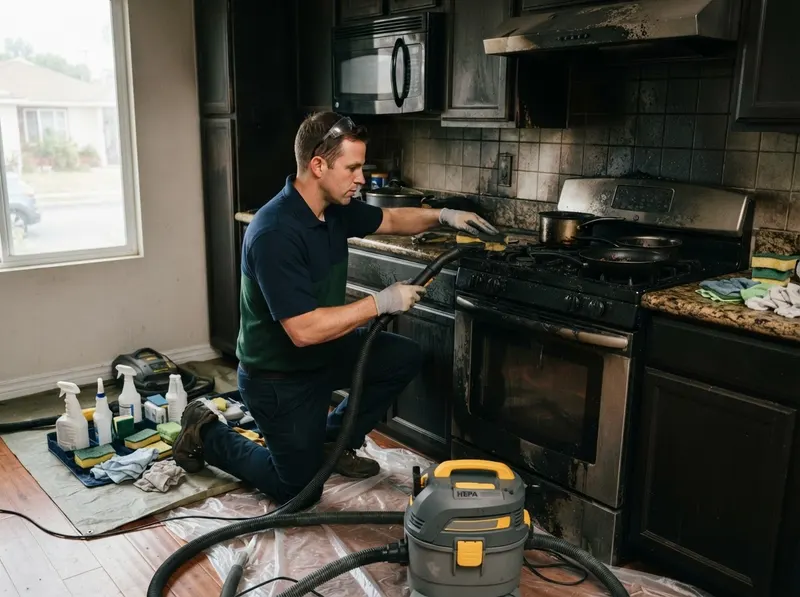
Cooking fires generate high-temperature protein residues that deposit as a thin, amber-colored, virtually invisible film across horizontal and vertical surfaces. Unlike dry wood smoke, grease smoke coats framing, ceiling joists, and interior ductwork with an oily residue that turns acidic when combined with room humidity. In residential areas like Silver Lake, Echo Park, and Boyle Heights, older bungalow kitchens with shared architectural air pathways channel these protein odors into adjoining bedrooms within minutes of ignition. Applying water-based domestic cleaners to protein soot cross-links the organic polymers into paint and varnished oak cabinets, causing permanent discoloration. Standard restoration methodology demands chemical dry sponges, enzyme-based degreasers, and HEPA air scrubbers moving at least 500 cubic feet of air per minute (CFM) to eliminate airborne particulates.
Modern open-concept floor plans in Hollywood Hills, Encino, and Sherman Oaks present distinct structural challenges because uninterrupted ceiling lines carry pressurized smoke directly into living rooms and second-story lofts. Extinguishing a range-top fire with a dry chemical Class ABC fire extinguisher expels monoammonium phosphate powder, a corrosive salt that corrodes copper wiring, circuit breaker panels, and stainless steel range hoods when exposed to ambient moisture. Step 1 requires isolation using 6-mil poly containment barriers with negative-pressure air filtration units to halt drift. Step 2 executes dry particulate removal from upper ceilings downward to flooring. Step 3 utilizes thermal fogging or hydroxyl generators to penetrate open framing and wall cavities without leaving residue on luxury quartz or unsealed stone surfaces.
Properties located in hillside or canyon zones such as Brentwood, Pacific Palisades, and Woodland Hills frequently experience marine-layer dampness or valley heat inversion, which traps volatile organic compounds (VOCs) within interior drywall. If protein smoke penetrates unsealed drywall, standard repainting fails to block the odor; volatile compounds continuously off-gas through standard acrylic primer coats during warm seasonal temperature spikes. Structural mitigation requires applying pigmented shellac-based or alcohol-based sealers directly over the cleaned sub-wall surface to establish a vapor-tight barrier. If suppression efforts from local municipal emergency crews leave standing water behind baseboards, structural moisture meters and thermal imaging cameras determine drying protocols before black mold species colonize behind damp cabinetry.
Every job gets a firm, written price after a free on-site visit.
Tell us about your kitchen cooking fire mitigation job in los angeles and we'll send a clear, written quote, usually the same day.
 Elite Fire Damage Restoration